Sportswear Printing Methods: Choose the Right Technique for Your Brand

Choosing a printing method determines how your garment feels, how long the artwork lasts through washing, and your unit cost at scale. Axis Sportswear runs eight in-house printing lines for apparel brands, clubs, and private-label businesses across the USA, UK, and Europe — and we match the method to your fabric, artwork, and order size, rather than pushing whatever is easiest to produce.

This page breaks down every method we offer: what it is best for, which fabrics it works on, realistic minimums, and how it holds up after 50 washes. If you already know what you need, skip ahead and send us your artwork — we will confirm the right method and send a strike-off before bulk production.

 Get a Free Quote

8In-house methods
50 pcsLow MOQ per style
7–10 daysSample turnaround
40+Countries shipped

Every printing technique we run in-house

All eight methods below are produced at our own facility. Nothing is subcontracted, which is why we can hold color consistency across repeat orders and turn samples in 7–10 days.

Sublimation printed custom sports jersey with vibrant all-over polyester design

Sublimation Printing

Sublimation turns solid dye into gas under heat and pressure, bonding it inside the polyester fibre rather than sitting on top of it. The result is a print with literally no hand feel — you cannot locate the graphic by touch. Because there is no ink layer, there is nothing to crack, peel or fade, and breathability is completely unaffected.

This is the standard for custom soccer jerseysbaseball kits, cycling wear and any garment needing edge-to-edge graphics, gradients or sponsor blocks that run across seams. We print panels flat before cut-and-sew, so the artwork wraps the body cleanly with no gaps at the shoulders or side panels.


Strengths

  • Unlimited colours at no extra cost
  • Zero weight added to the garment
  • Every player number can differ — no setup penalty

Limitations

  • Polyester only — will not work on cotton
  • Needs a white or light base fabric
  • Cannot print true white as an ink


Screen Printing (Plastisol)

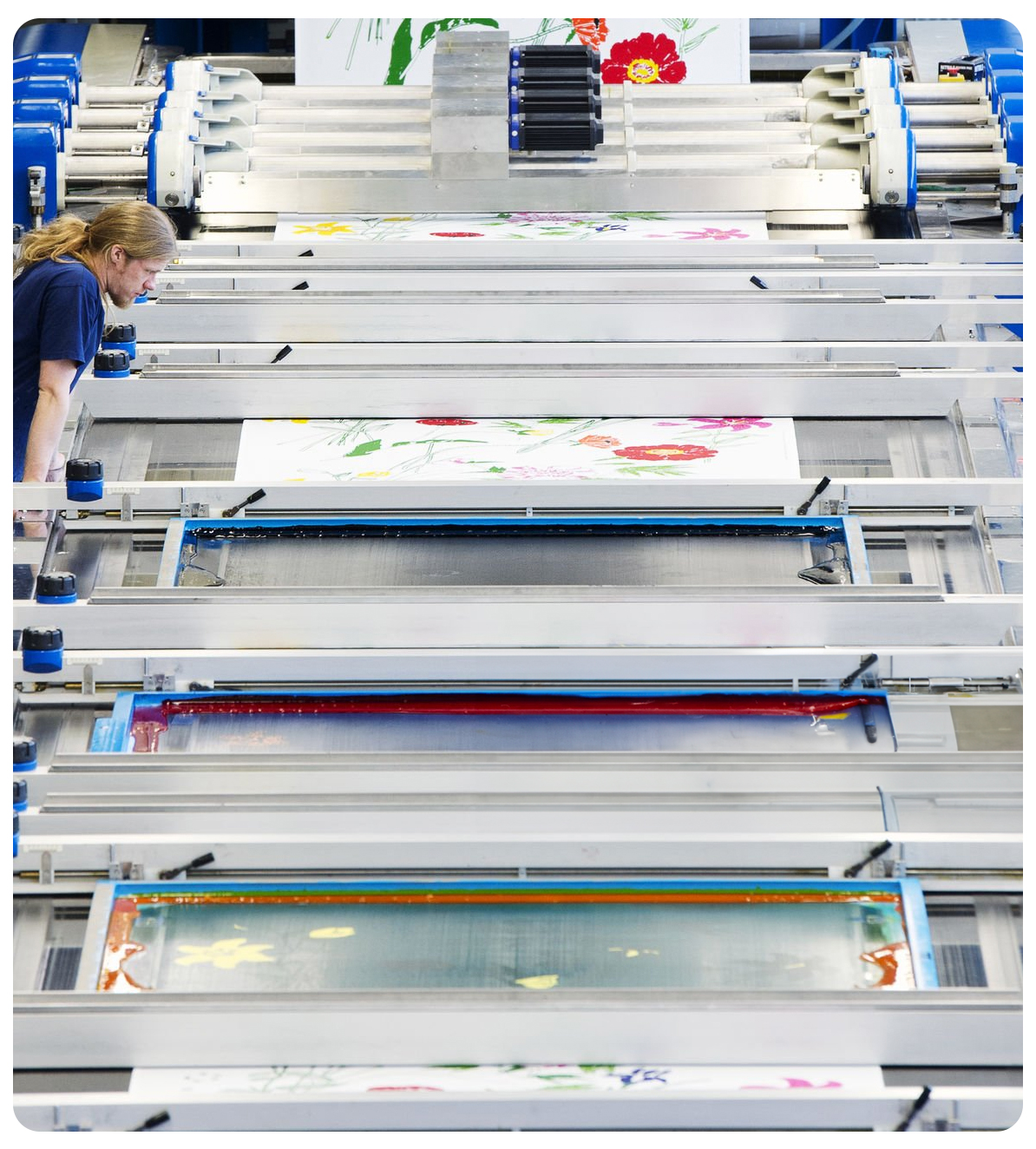
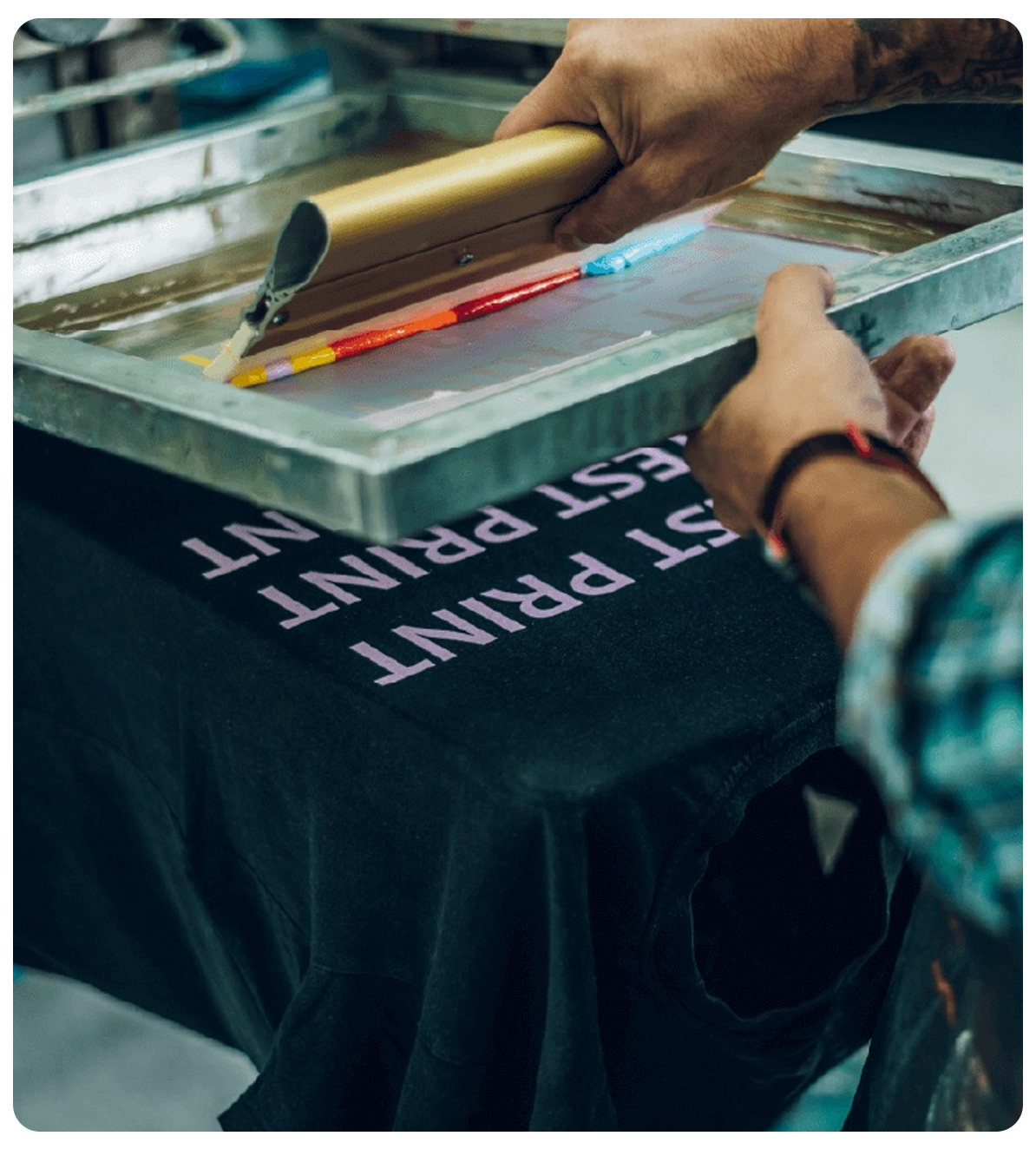
Screen printing pushes ink through a mesh stencil, one screen per color. Setup takes time, but once the screens are burned, the per-unit cost drops sharply — which is why it remains the most economical route for bulk orders above roughly 200 pieces. Opacity is excellent, so bold logos stay bright even on black garments.

We run automatic presses with registration control, so a 6-color design lands identically on unit 1 and unit 2,000. It is the default choice for custom hoodiesgym tank tops, and gym merchandise where one strong graphic repeats across a large run. All plastisol inks we stock are phthalate-free to meet US and EU consumer safety requirements.


Strengths

  • Lowest unit cost at volume
  • Highest opacity on dark fabrics
  • Specialty inks: metallic, glitter, reflective

Limitations

  • Cost rises with each added color
  • Not suited to photographs or gradients
  • Setup makes very small runs uneconomical
 
 
Screen printing process applying durable team logo ink on custom sportswear t-shirt
Water based printing soft hand feel design on premium cotton activewear garment

Water-Based & Discharge Printing

Water-based inks soak into the fiber instead of forming a film on the surface, giving a print you can barely feel and a vintage, worn-in look straight off the press. Discharge printing goes a step further on dark cotton: it removes the garment dye and replaces it with pigment in a single pass, so a light graphic on a black tee has zero plastic layer.

Both are the go-to for premium retail-grade cotton pieces and lifestyle private label collections where softness sells the product. They are also the most environmentally sound options we offer: no PVC, no phthalates, and a significantly lower solvent load, which matters for brands selling into the EU.

Strengths

  • Softest hand feel of any ink method
  • Fully breathable print area
  • Eco-friendlier — no PVC or phthalates

Limitations

  • Discharge only works on reactive-dyed cotton
  • Final shade varies slightly by garment dye lot
  • Lower opacity than plastisol
 

Puff & High-Density Printing

Puff ink contains a blowing agent that expands when it hits the heat tunnel, lifting the print 1–3 mm off the garment with soft rounded edges. High-density uses a thick emulsion stencil to build a sharp-edged raised block instead — think embossed hardware rather than a soft bubble. Both add a tactile, premium cue that flat printing cannot replicate.

This is the finished driving current streetwear and athleisure collections: heavyweight hoodies, crewnecks, and tracksuit sets where a chest logo needs to make a statement. Keep artwork bold — fine serifs and thin strokes under 3 mm distort as the ink rises, so we will flag and adjust anything too delicate before production.


Strengths

  • Instant premium, tactile impression
  • Photographs well for e-commerce
  • Pairs with flat print in one design

Limitations

  • Not suitable for fine detail or small text
  • Large solid puff areas can crack over time
  • Should not be ironed directly
Puff screen printed hoodie with raised 3D embossed logo for streetwear style apparel
Heat transfer printing of player name and number on custom sports uniform

Heat Transfer & HTV

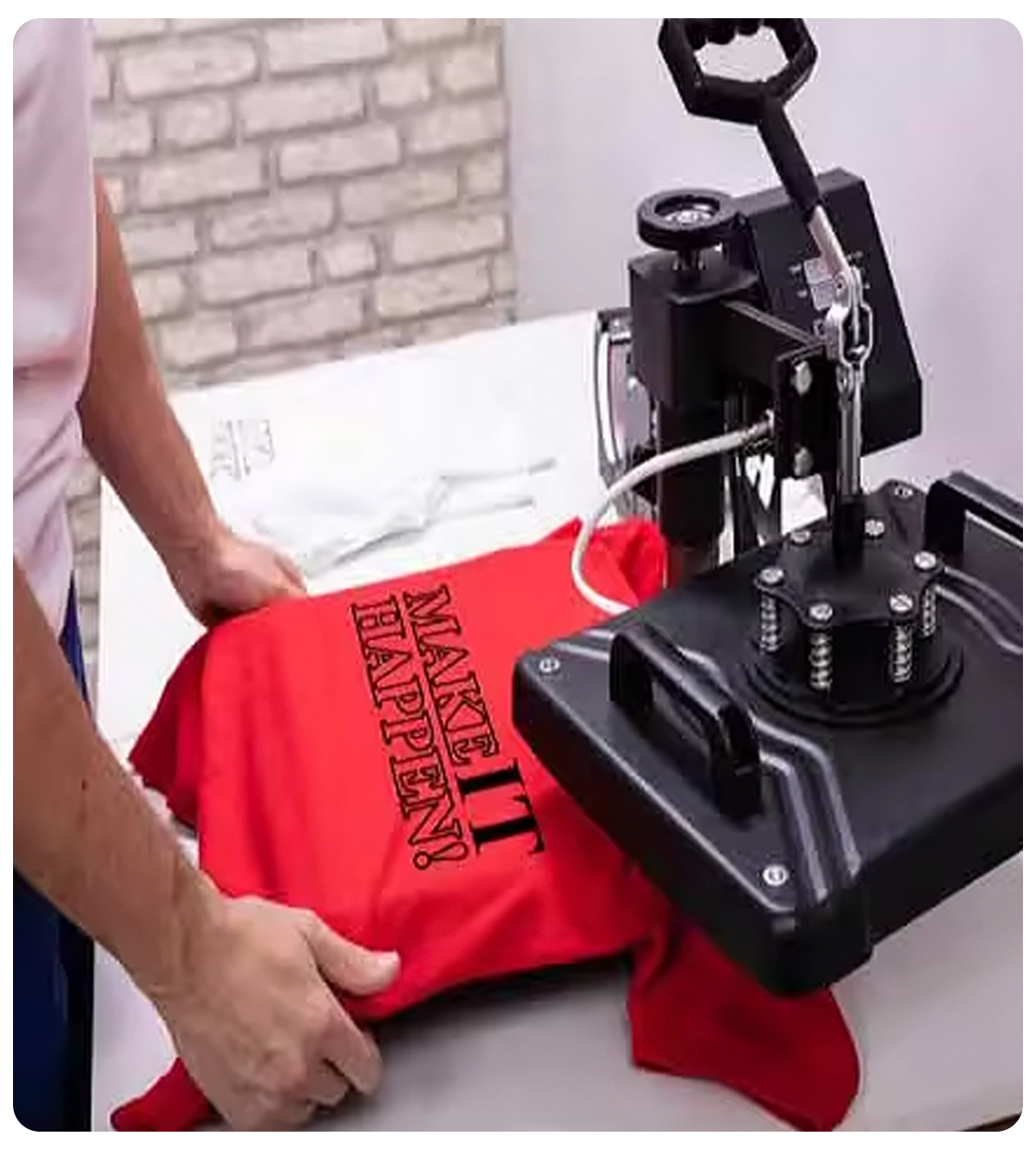
Heat transfer applies a pre-made design to the garment with a press. Cut vinyl (HTV) is used for solid shapes, player names, and squad numbers; printed transfers are used for full-color artwork. Because there are no screens to burn, it is the fastest and cheapest route for one-offs and personalization.

In practice, this is how we handle roster numbering on team orders: the kit body is sublimated or screen-printed in bulk, then each garment is individually named and numbered at the press. It is also the practical answer for club shops and academies reordering five or ten pieces at a time.

Strengths

  • No setup cost — viable from one piece
  • Every unit can be different
  • Precise placement on tricky panels

Limitations

  • Noticeable film layer on the surface
  • Edges can lift if washed hot
  • Unit cost stays flat — no volume saving
 

Direct-to-Film (DTF) Printing

DTF prints your artwork onto PET film, coats it with hot-melt adhesive powder, cures the film, and then presses it onto the garment. Its advantage over every other digital method is fabric indifference; it transfers bonds to cotton, polyester, blends, nylon, and fleece, in any color, without pre-treatment.

That makes it the workhorse for brands running a mixed catalog: one artwork file applied across leggings, tees, and jackets in a consistent color. DTF also carries a strong white underbase, so full-color photographic artwork stays vivid on black garments where sublimation simply cannot go.

Strengths

  • Works on dark and synthetic fabrics
  • Unlimited colors, no setup fee
  • Excellent stretch recovery on activewear

Limitations

  • A thin film layer is detectable by touch
  • Large solid areas reduce breathability
  • Dearer per unit than screen at high volume
 
Direct to film DTF printing transfer applied on custom sportswear for durable prints
Direct to garment DTG printing high resolution artwork on custom cotton apparel

Direct-to-Garment (DTG) Printing

DTG works like an inkjet printer aimed at fabric, laying water-based pigment directly into cotton fibers. Resolution is the highest of any method we run, so photographs, fine gradients, and illustrations with hundreds of tones reproduce accurately. The finish is soft and fully breathable.

It suits brands testing designs before committing to bulk, drop collections, and custom t-shirt and polo ranges built on high-cotton fabric. Cotton content matters: below roughly 50% cotton, ink absorption drops and colors mute — we will recommend DTF instead if your fabric is poly-heavy.

Strengths

  • Greatest detail and tonal accuracy
  • Very soft, fully breathable finish
  • No screens, no minimum color penalty

Limitations

  • Cotton-dependent — weak on polyester
  • Dark garments need pre-treatment
  • Slower and costlier at high volume

Specialty Finishes

Beyond the core methods, we run a set of effect finishes for brands that need a signature detail. Reflective print uses glass-bead ink that returns headlight glare — a genuine safety feature on running and cycling gear, and increasingly expected by European buyers for night-visibility ranges. Silicone ink gives a durable, glossy, highly stretchable print that will not crack on compression fabric.

Flock lays short synthetic fibers over adhesive for a velvet-textured finish used on varsity and retro pieces. Glow-in-the-dark phosphorescent ink charges under light and holds a visible glow, popular on event and festival apparel. All four can be combined with a base print in a single design — ask for a strike-off if you want to see them layered.

Strengths

  • Differentiates a range instantly
  • Reflective adds real functional value
  • Silicone survives heavy stretch

Limitations

  • Higher cost per piece
  • Color range is restricted
  • Sampling strongly recommended first
 
Custom sportswear printing methods used by Axis Sportswear for team uniforms and activewear

How to choose the right printing method

Three questions settle it in almost every case. Work through them in order; fabric rules out more options than anything else, so start there.

100% polyester on a light base → sublimation. Cotton or high-cotton → screen print, DTG, water-based or discharge. Mixed catalogue, dark colours or nylon → DTF. This single answer usually eliminates half the list.

Under 50 → DTG, DTF or heat transfer, where there is no setup to amortise. Over 200 with four colours or fewer → screen printing wins clearly on unit cost. Full-kit team orders at any volume → sublimation.

Photographs and gradients need a digital method — sublimation, DTF or DTG. Flat vector logos in a few spot colours are ideal for screen print. Anything crossing a seam or running edge-to-edge must be sublimated before cut and sew.

Sublimation, by a clear margin. Because the dye bonds inside the polyester fibre rather than sitting on the surface, there is no ink layer that can crack, peel or wash away — the graphic lasts as long as the garment does. Among surface methods, screen printing and DTF both hold up well past 50 washes when cared for correctly.

DTG prints ink directly into the garment and needs cotton to absorb it properly, giving a very soft finish but limited fabric compatibility. DTF prints onto a film that is then heat-pressed on, so it bonds to almost any fabric including polyester, blends and dark colours. Choose DTG for soft cotton tees; choose DTF when your range mixes fabrics or uses performance synthetics.

Can you print on 100% polyester activewear?


What is your minimum order quantity for custom printing?
How long does production take from artwork approval?
Do you offer eco-friendly printing options?
Can you match my exact brand colours?
Can more than one printing method be combined on one garment?

Send us your artwork — we will recommend the method

Tell us the garment, the fabric and the quantity. You will get a printing recommendation, a mock-up and a quote, usually within 24 hours. Samples in 7–10 days, MOQs from 50 pieces, and free design support on every order.
Yes. Sublimation is the best option on light-coloured polyester and produces zero hand feel. For dark polyester, or where sublimation is not viable, DTF and screen printing with a poly-specific low-bleed ink both work well. DTG is not recommended on polyester — the ink does not absorb and colours come out muted.


Minimums start at 50 pieces per style for sublimation, screen printing and puff, and drop to 20–25 pieces for DTG, DTF and heat transfer. Colourways within a style can usually be split. If you are launching a first collection and need to stay under those numbers, contact us — we are often able to work something out.

A manufacturing partner, not just a print shop

Axis Sportswear has manufactured custom sportswear for over 15 years, supplying more than 500 brands across 40+ countries. Every printing method described on this page runs inside our own facility, alongside cut and sewembroiderydyeing and fabric washing — so one team owns your order from fabric to finished carton.


Low MOQ, real ones

Start at 50 pieces per style on most methods, and 20–25 on digital. No inflated minimums to make a job worth our time.

Samples in 7–10 days

You approve a physical garment before bulk. Strike-offs on specialty finishes so there are no surprises at delivery.

Free design support

In-house designers redraw, colour-separate and prepare production files at no cost — including full tech packs.

Method-agnostic advice

We recommend what suits your fabric and volume. If screen print beats DTF for your order, we will tell you so.

Repeat-order consistency

Screens, colour recipes and approved samples archived against your account, so reorder three matches order one.

Worldwide delivery

Regular shipments to the USA, UK, Canada, Australia and across the EU, with DDP available on request.

Send us your artwork — we will recommend the method

Tell us the garment, the fabric, and the quantity. You will get a printing recommendation, a mock-up, and a quote, usually within 24 hours.

Samples in 7–10 days, MOQs from 50 pieces, and free design support on every order.

 
Axis Assistant