Send us a sketch. Get a sample in 7–10 days.
Tell us what you want to build, roughly how many, and which market it is for.
You will get a quote and a construction recommendation within 24 hours and free tech pack and pattern work once you proceed.
Cut and sew means we build your garment from raw fabric, drafting the pattern, cutting every panel, and assembling it stitch by stitch instead of decorating a blank someone else made. It is the only route to a genuinely proprietary fit, your own panel lines, and a garment your competitor cannot order from the same catalog.
Axis Sportswear runs full cut-and-sew production in-house for apparel brands, clubs, and private label businesses across the USA, UK, and Europe — from a hand-drawn sketch or a finished tech pack, graded to US or EU size standards, with a physical sample in your hands before a single bulk unit is cut.
Eight stages, all under one roof at our facility. The timings shown are typical for a first-order system. Repeat orders skip stages 01 to 03 entirely and move straight to production.
Everything starts with a tech pack: flat sketches, construction callouts, measurement points, fabric specification, trims and artwork placement. If you already have one, we work from it directly. If you have a sketch, a reference garment or just a description, our design team builds the tech pack for you at no charge.
This is the stage where most costly mistakes get caught. An hour spent confirming pocket depth or hem finish here saves a wasted sample round later.
A pattern maker drafts each panel to your measurements using CAD, accounting for fabric stretch, seam allowance and shrinkage. This is where fit is genuinely decided. A 2 cm difference in armhole depth changes how a jersey moves; a misplaced side seam ruins a legging silhouette, no matter how good the fabric is.
The base pattern is then graded across your full size range. We keep your pattern archived against your account and never use it for another client, so every reorder produces an identical garment.
We source knits and wovens against your specification: GSM, composition, stretch percentage, and finish. You receive swatches for approval before anything is committed, along with a recommendation on whether a different fabric would better serve the garment or the price point.
Before cutting, we test shrinkage, colorfastness, and stretch recovery. A fabric that shrinks 5% after one wash turns a correctly patterned garment into a returns problem, and it is far cheaper to find that out on a test swatch than on 500 finished units.
A marker is the cutting layout — a puzzle that fits every pattern piece across the fabric width with the least possible waste. Good markers routinely reach 85–90% utilisation, and that efficiency comes straight off your unit cost. Fabric is spread in layers, aligned on grain, and rested so it relaxes before the knife touches it.
Panels are then cut through the spread by straight-knife or die cutter and bundled by size and colorway with a ticket that follows them down the line. Every bundle is traceable, which allows us to isolate a fault to a single bundle rather than scrapping an entire order.
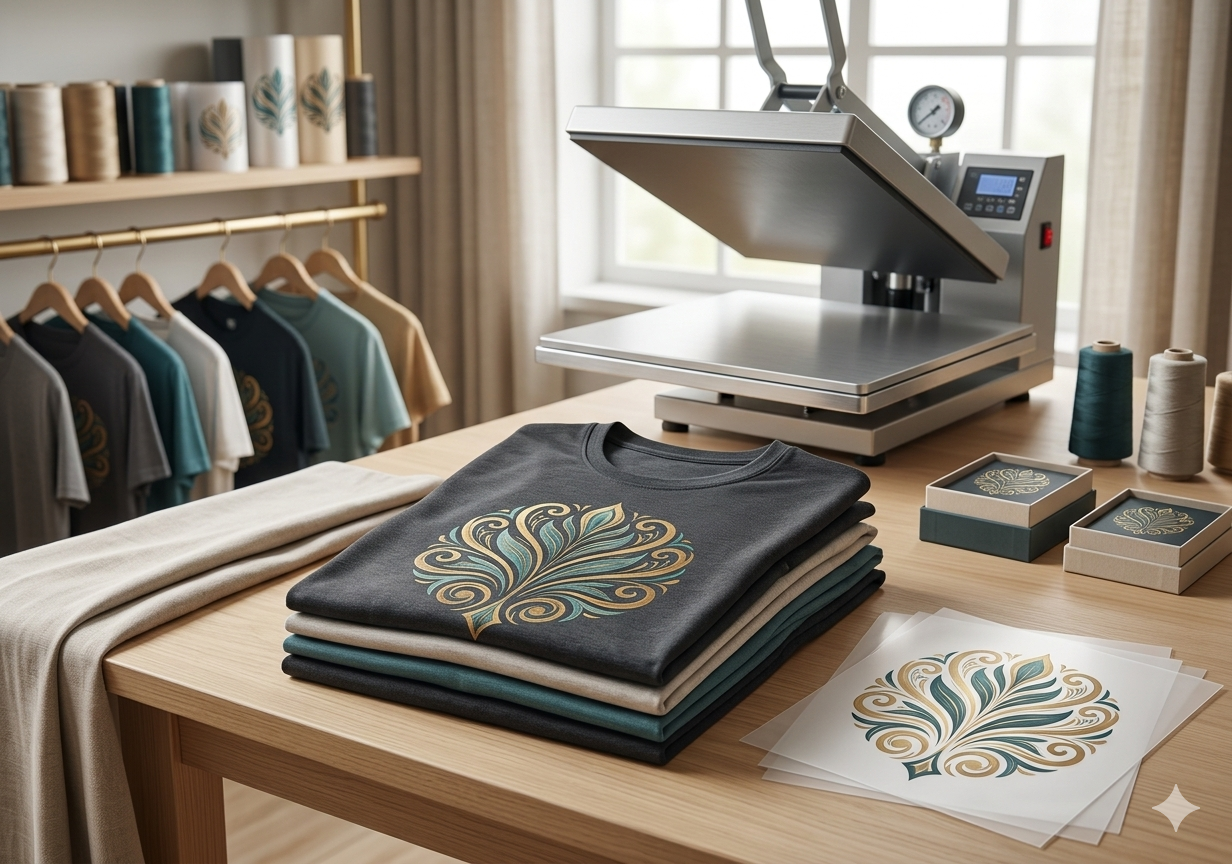
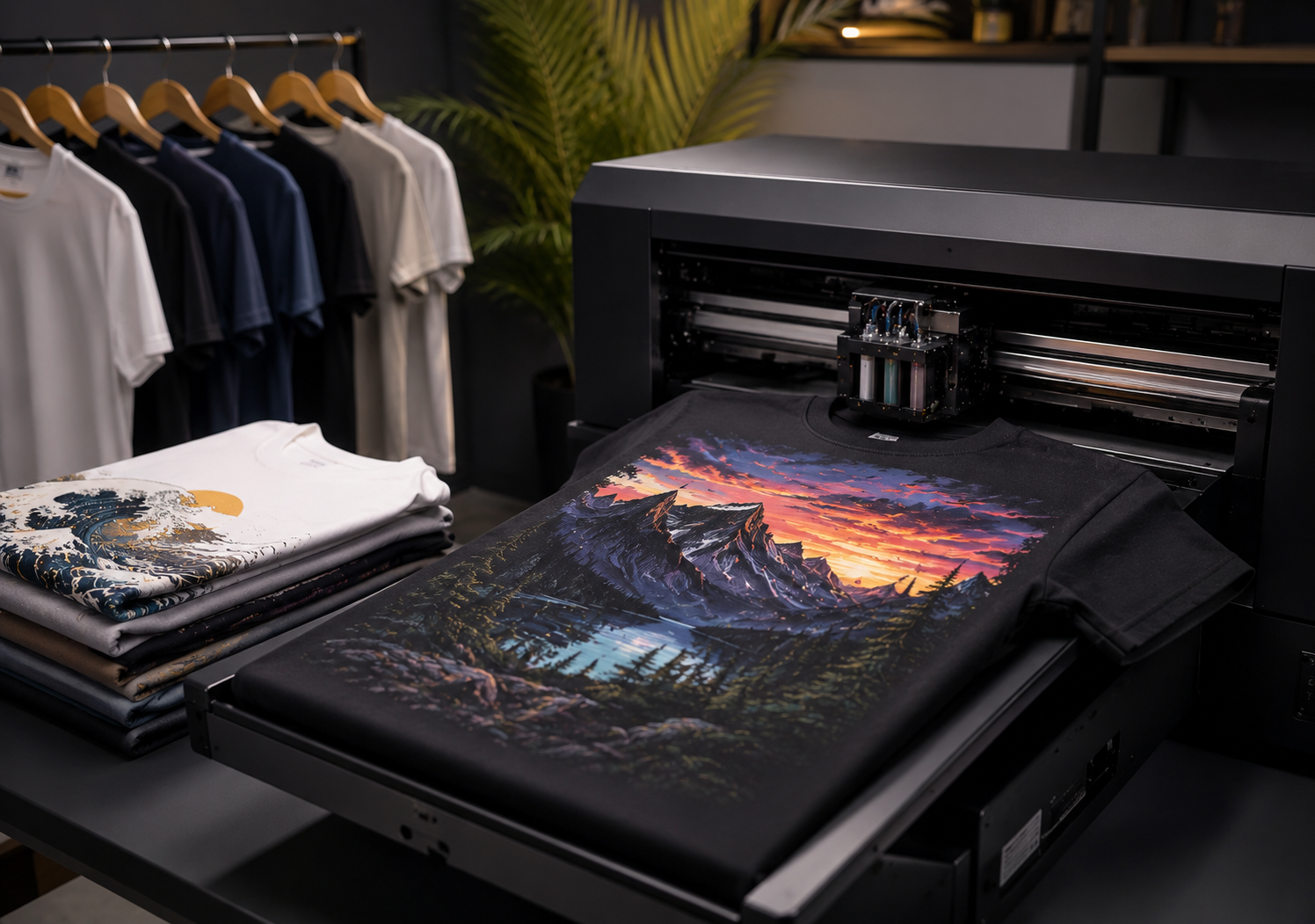
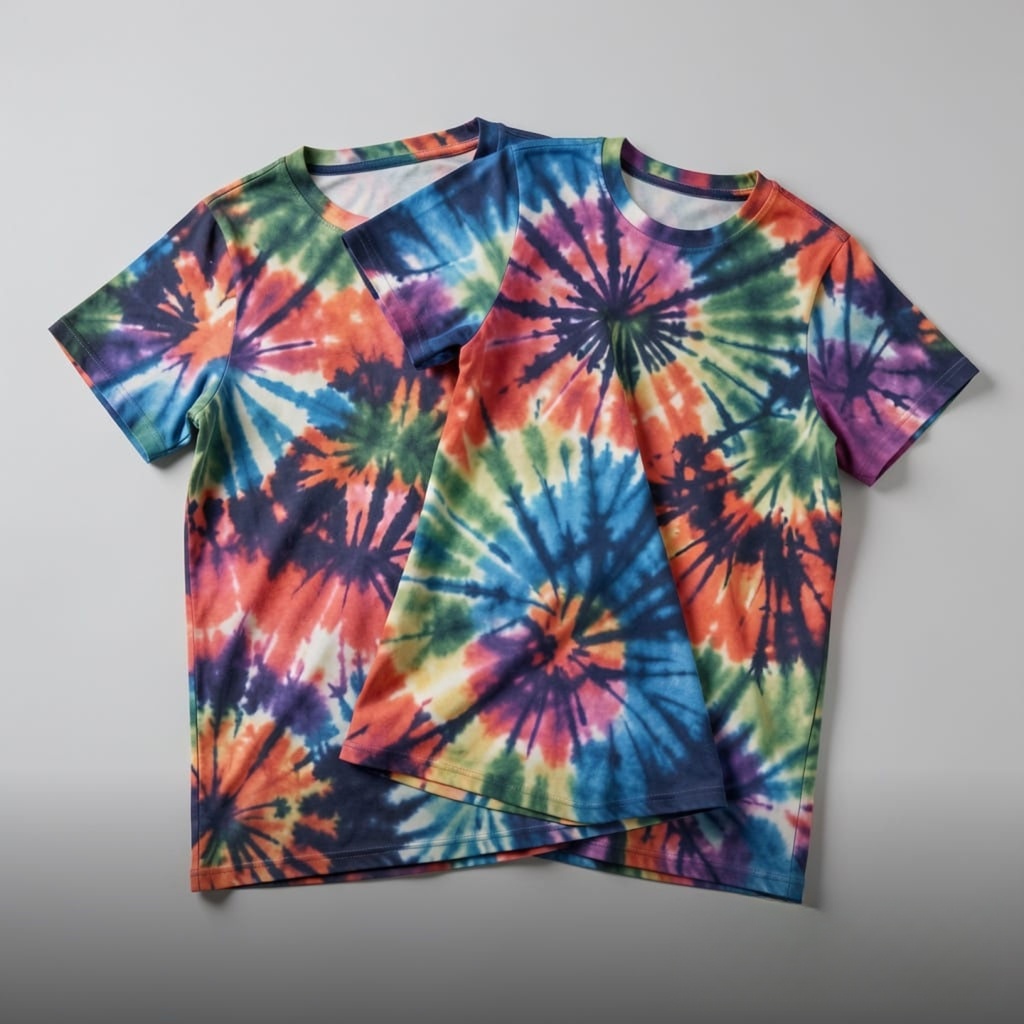
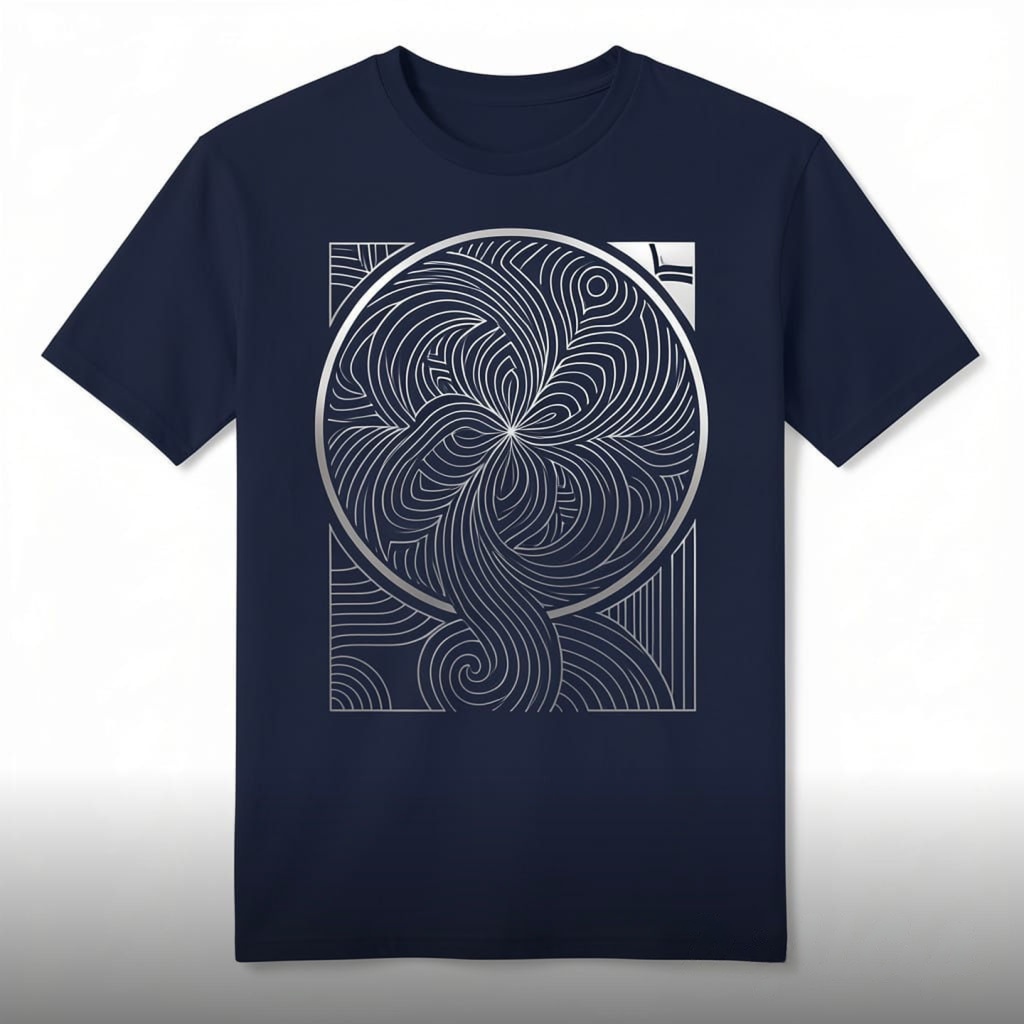
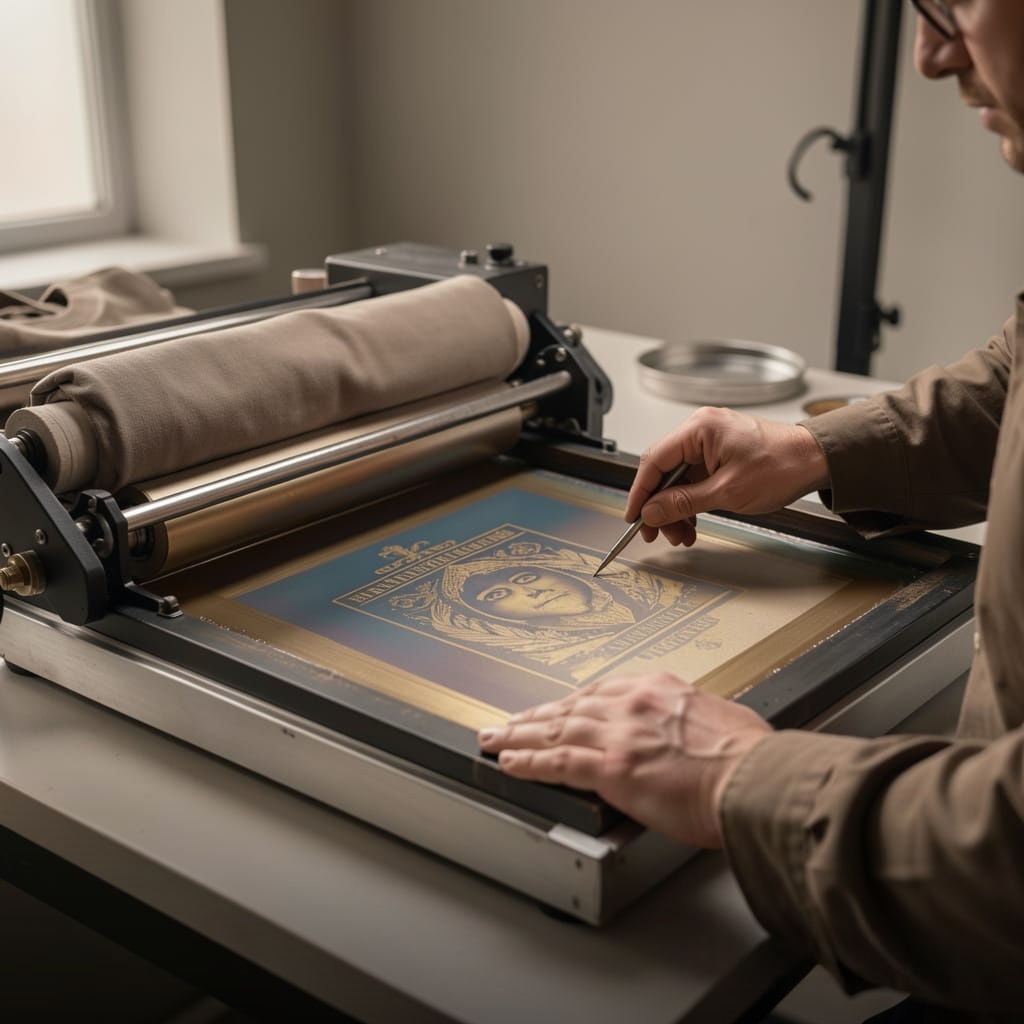
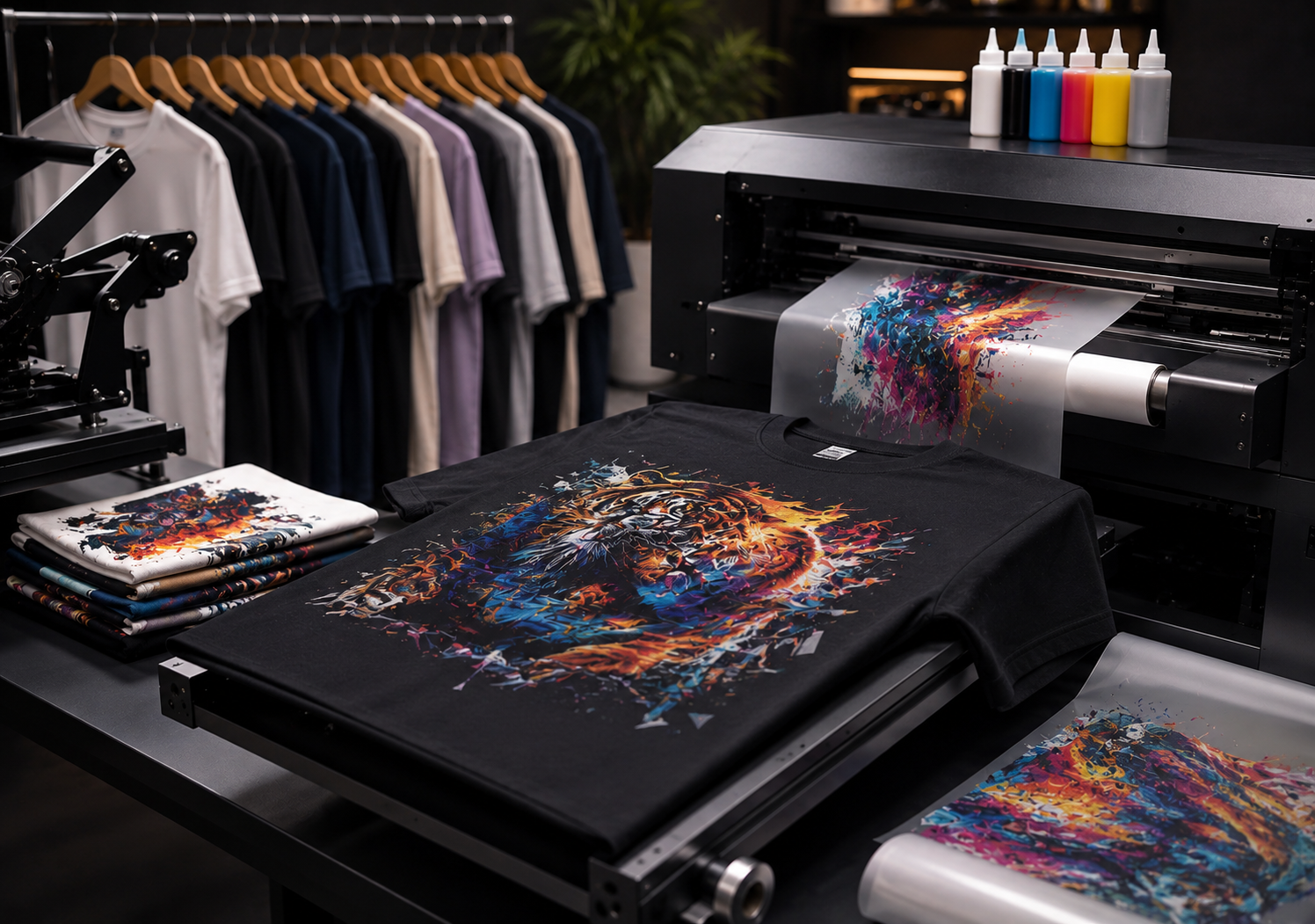
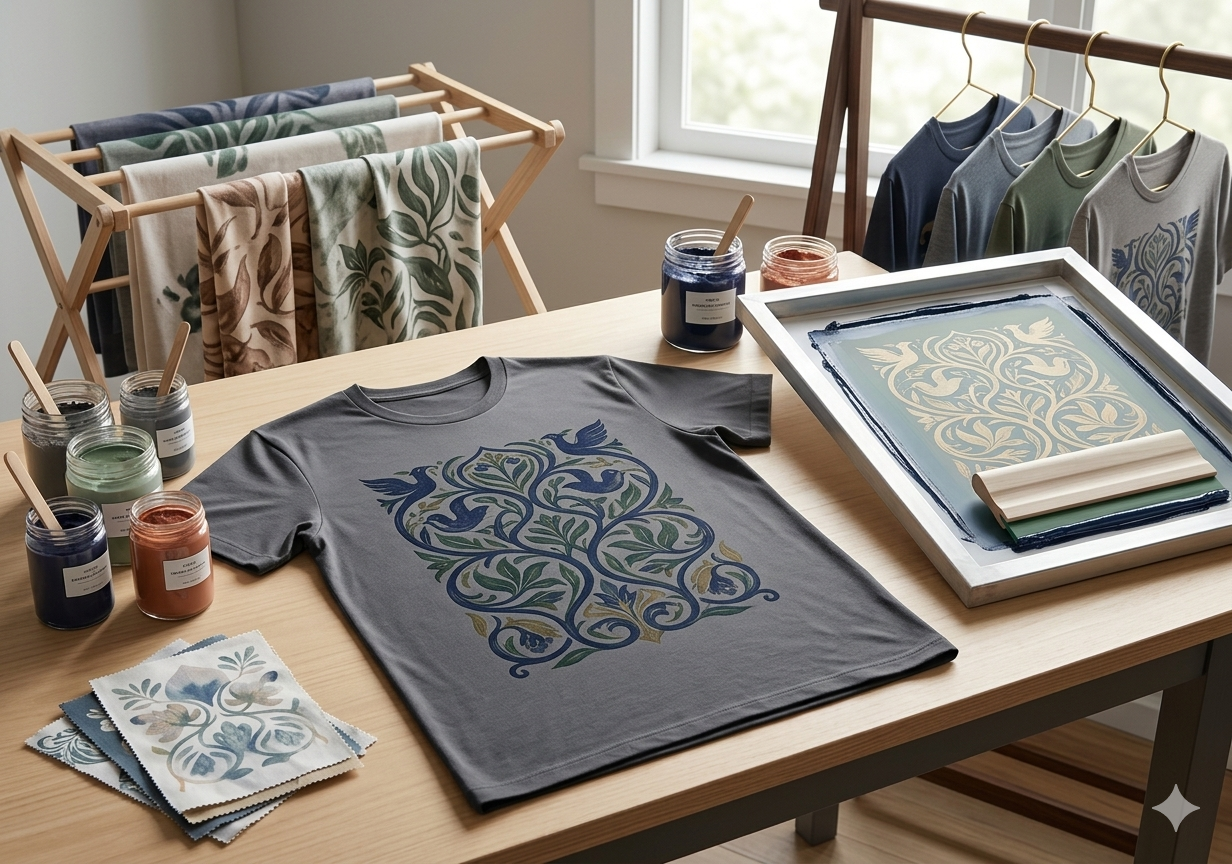
Any decoration that must happen before assembly happens here — sublimation on flat panels, embroidery hooped on the flat, or screen printing. Printing flat is precisely why cut and sew allows edge-to-edge graphics: artwork can run across what will become a seam and still line up perfectly on the finished body.
This is the stage that separates a real cut-and-sew kit from a decorated blank. On a blank, a sponsor block stops dead at the side seam. On a cut-and-sew garment, it continues around the body. See our full printing methods guide for every option available at this stage.
Panels move down a line of specialised machines — overlockers, flatlock, coverstitch, bartack. Each operator handles one operation repeatedly, which is what produces consistency across thousands of units rather than one skilled tailor producing thousands of slightly different garments.
Stitch type is chosen per seam and per fabric, never applied uniformly. Flatlock on leggings and compression wear so there is no ridge to chafe under load. Coverstitch on hems to keep full stretch at the opening. Bartack at pocket corners and drawcord exits, which are the points that fail first. Overlock for knit side seams, lockstitch for wovens, and gusset panels on bottoms to remove the four-way seam junction at the crotch. Standard density is 10–14 SPI, set per fabric.
Woven labels, hang tags, care labels, drawcords, zippers, elastic and any custom hardware go on at this stage, followed by thread trimming, pressing and a needle-detection pass on every unit.
This is also where your private label branding is applied. For most buyers it is the stage where the garment finally stops looking like a sample and starts looking like their product — and it is worth investing in, because a generic neck label quietly caps what you can charge.
Garments are inspected against your approved sample to an AQL 2.5 standard: every point of measure, seam strength, colour consistency, print adhesion and trim placement. Anything outside a ±0.5 cm tolerance on key points is pulled and remade rather than shipped and argued about later.
Approved units are folded, poly-bagged, cartoned and photographed before dispatch. You see pre-shipment images and approve them before anything leaves the factory, so problems get caught here rather than after you have paid freight.
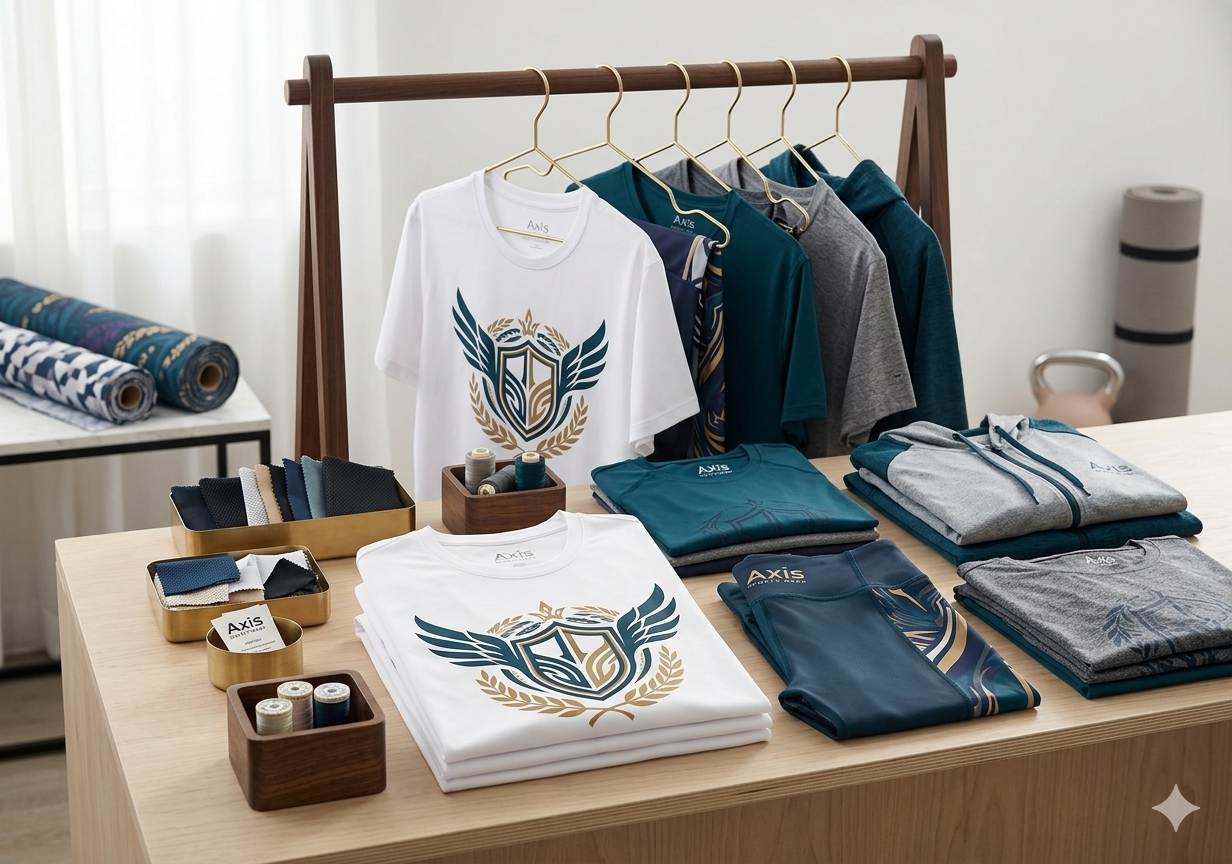
Three questions settle almost every project brief. Answer them before you contact any factory — including us — and your quote will be accurate the first time instead of the third.
One style in three colourways is a different project from three styles in one colourway. Each style needs its own pattern, sample and minimum. Starting with one hero style and proving it before widening the range is almost always the cheaper route.
Our minimum is 50 pieces per style, splittable across sizes and colourways. Think through the size curve now — ordering equal quantities of XS through 3XL leaves you with dead stock at both ends. We can advise a curve based on your market.
Photographs and gradients need a digital method — sublimation, DTF or DTG. Flat vector logos in a few spot colours are ideal for screen print. Anything crossing a seam or running edge-to-edge must be sublimated before cut and sew.
Sublimation, by a clear margin. Because the dye bonds inside the polyester fibre rather than sitting on the surface, there is no ink layer that can crack, peel or wash away — the graphic lasts as long as the garment does. Among surface methods, screen printing and DTF both hold up well past 50 washes when cared for correctly.
DTG prints ink directly into the garment and needs cotton to absorb it properly, giving a very soft finish but limited fabric compatibility. DTF prints onto a film that is then heat-pressed on, so it bonds to almost any fabric including polyester, blends and dark colours. Choose DTG for soft cotton tees; choose DTF when your range mixes fabrics or uses performance synthetics.
Tell us the garment, the fabric and the quantity. You will get a printing recommendation, a mock-up and a quote, usually within 24 hours. Samples in 7–10 days, MOQs from 50 pieces, and free design support on every order.
Yes. Sublimation is the best option on light-coloured polyester and produces zero hand feel. For dark polyester, or where sublimation is not viable, DTF and screen printing with a poly-specific low-bleed ink both work well. DTG is not recommended on polyester — the ink does not absorb and colours come out muted.
Minimums start at 50 pieces per style for sublimation, screen printing and puff, and drop to 20–25 pieces for DTG, DTF and heat transfer. Colourways within a style can usually be split. If you are launching a first collection and need to stay under those numbers, contact us — we are often able to work something out.
Axis Sportswear has manufactured custom sportswear for over 15 years, supplying more than 500 brands across 40+ countries. Pattern making, cutting, sewing, printing, embroidery, dyeing and fabric washing all happen in-house — so one team owns your order from raw fabric to finished carton.
Start at 50 pieces per style on most methods, and 20–25 on digital. No inflated minimums to make a job worth our time.
Tech packs, pattern drafting and grading at no charge. You pay for the sample and the garments, not the paperwork.
Archived against your account used for another client. Reorder in eighteen months and it is the same garment.
No trading company between you and the floor. You talk to the people who cut and sew the garment.
Both size sets from one base pattern, produced in the same run, correctly labelled for each market.
Pre-shipment inspection images sent for your approval, so nothing arrives as a surprise.
Tell us what you want to build, roughly how many, and which market it is for.
You will get a quote and a construction recommendation within 24 hours and free tech pack and pattern work once you proceed.
Fill in your details below and we'll send it right away.
We manufacture premium custom sportswear, activewear, and team uniforms for brands worldwide, combining high-quality fabrics, full customization, and reliable wholesale production.
Copyright © 2026 Axis Sportswear. All rights reserved.
 Axis Assistant